.svg)

.svg)





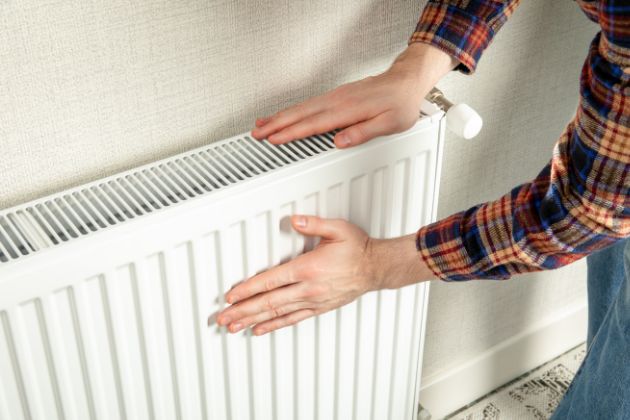
A radiator that stays cold is usually caused by simple issues like valve settings, trapped air, or an unbalanced heating system. These problems are common, especially in older homes around Wimbledon or Kingston with period features like microbore pipework or original radiators. Before jumping to the conclusion that your boiler has failed or needs expensive repairs, it’s worth working through these nine straightforward checks step-by-step. Always take care when handling hot surfaces or pressurised parts of your heating system to avoid injury or damage.
Following this methodical approach can often save you time, money, and the hassle of unnecessary call-outs.
Start with this quick radiator checklist
If you need a fast summary, use the following checks before arranging a visit:
- Set the thermostatic radiator valve, or TRV, to a higher number and check the valve pin.
- Make sure the lockshield valve is not fully closed and check whether the radiator needs balancing.
- Bleed trapped air safely, then check the boiler pressure afterwards.
- Look for sludge symptoms, stuck valves, pump problems or zone control faults.
- Call a professional for leaks, repeated pressure loss, fault codes or no heating across zones.
Check the radiator and controls
1. Check the TRV or radiator head
Turn the numbered TRV head clockwise or anti-clockwise, depending on its design, until it points to a higher setting. Give the radiator 20 to 30 minutes to warm. If other radiators heat normally but this one does not, the TRV may be turned down, fitted incorrectly or stuck.
2. Test the valve pin
If you are comfortable removing the TRV head, the small metal pin underneath should move down and spring back up gently. Do not remove the valve body or force the pin with tools. If it is stuck in the closed position, light tapping around the valve and careful, gentle movement may free it, but stop if it will not move or water appears.
3. Check the lockshield valve and system balance
The lockshield is usually found at the opposite end of the radiator and may have a plain cap. It controls the flow of hot water through the radiator. If it is fully closed, the radiator may remain cold; if several radiators are unevenly heated, the system may need balancing rather than simply opening every valve.
A useful clue is a radiator that is hot near the valve but cool elsewhere, while another radiator becomes hot very quickly. Older heating systems in Wimbledon and Kingston period properties can have microbore pipework and older radiators, making correct balancing especially helpful.
Look for air, sludge and temperature patterns
4. Bleed the radiator safely
If the top of the radiator is cold but the bottom is warmer, trapped air is a likely cause. Turn the heating off and allow the radiator to cool, place a cloth and container below the bleed screw, then open it slowly with a radiator key until you hear air escaping. Close it as soon as water appears, without removing the screw completely.
After bleeding, check the boiler pressure using its gauge. Many sealed systems operate around 1 to 1.5 bar when cold, but follow the pressure range in your boiler manual. Do not over-pressurise the system, and do not bleed a hot radiator because escaping water can scald.
5. Check for sludge or restricted circulation
If the top is warm but the bottom remains cold, sludge or debris may be restricting water flow. A radiator that is cold at one side and warmer at the other can also indicate poor circulation or balancing. Do not remove a radiator or flush the system yourself unless you know how to isolate it safely, as dirty water and leaks can cause damage.
6. Compare all the radiators
If only one radiator is affected, focus on its valves, air and local pipework. If all radiators are cold, check the boiler display, heating controls and circulation equipment instead. If radiators upstairs or in one section of the property are cold, a pump, airlock, zone valve or system pressure problem may be involved.
Check the boiler controls and heating zones
7. Check the thermostat and programmer
Set the room thermostat above the current room temperature and confirm that the programmer is set to heating on, not hot water only. Replace thermostat batteries if needed and check that smart thermostat schedules have not changed. Also make sure the boiler is in heating mode and has not been switched to summer or holiday settings.
8. Listen for pump or zone valve symptoms
A pump problem may cause humming, rattling or a lack of circulation, while a faulty motorised zone valve can leave one heating zone cold even though another works. Do not open electrical covers or try to repair these components yourself. A heating engineer can test whether the boiler is firing, the pump is circulating and the zone valve is opening.
9. Check pressure, leaks and fault codes
Look at the boiler pressure and display without removing the boiler casing. Repeated pressure drops, visible leaks, unusual noises or a fault code should be treated as professional call-out issues rather than problems to reset repeatedly.
When to stop troubleshooting
Turn the heating off and seek help if you smell gas, see water near electrical equipment, find a significant leak or notice scorching and burning smells. You should also call a professional if pressure keeps falling, the boiler shows a fault code, no heat reaches multiple zones, or the same radiator repeatedly fails after bleeding.
Book a heating diagnosis
Persistent cold radiators may point to balancing, sludge, a failing pump or an ageing boiler rather than a simple valve adjustment. Book a heating diagnosis with Riverside Construction Group for practical fault-finding and advice.
If the boiler needs attention, you can also arrange a Richmond boiler service. Where repeated failures make repair poor value, a suitable boiler installation may provide a more dependable upgrade. Call Riverside Construction Group on 02031481518 to discuss the next step.
.svg)